Five Business Books for People Who Like Systems, Moats, and Customers
Five saved Business ReaderPrint picks for readers who want sharper thinking about markets, networks, customer experience, and competitive advantage.

The latest saved business recommendations have a clear pattern. They are not motivational wallpaper. They are books about where advantage hides: in networks, partner dependencies, category choices, customer memory, and the models you use before you make a bet.
That is a useful reading lane. It avoids the two usual business-book traps: founder worship on one side, tidy frameworks on the other. These five should give you more working parts to think with.
Selection note: these came from a real ReadingRoll Business ReaderPrint set. The list favours systems, competition, markets, learning, and customer experience.
Featured pick89% matchCustomer experience
Start with Unreasonable Hospitality.
Will Guidara writes about service as a competitive weapon, but the point is not politeness. The useful idea is sharper: a business can make its work memorable by designing moments that feel wildly specific to the customer.
That makes it a good counterweight to the strategy-heavy books below. Read it when you want to move from market structure to the actual human being on the other side of the transaction.
The five-book stack
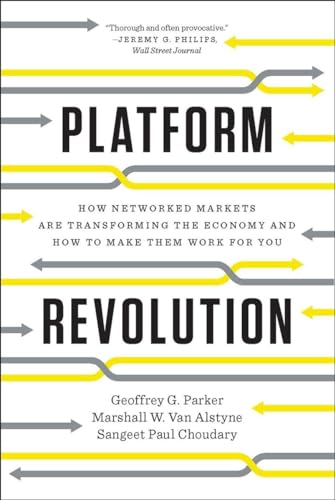
Platform Revolution
Geoffrey G. Parker, Marshall W. Van Alstyne, and Sangeet Paul Choudary
This is the cleanest pick for network effects and market design. The recommendation scored highest because it fits competition, systems, markets, and networks without repeating The Cold Start Problem.
Read it for the mechanics: governance, openness, matching, monetisation, and the ugly trade-offs that appear once a company stops selling a product and starts running a marketplace.
96% matchNetworksMarkets

Winning the Right Game
Ron Adner
A product can be good and still lose because the surrounding ecosystem is wrong. That is Adner's territory: partners, complements, standards, adoption timing, and all the dependencies that do not fit on a simple competitor map.
It belongs next to Platform Revolution, but it asks a colder question. Are you trying to win the game that actually decides the outcome?
95% matchEcosystemsStrategy
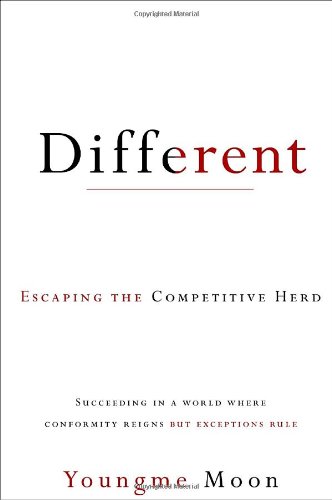
Different
Youngme Moon
This is the brand book in the stack, but not the soft one. Moon's argument is that categories make companies imitate each other, even while each one claims to be distinct.
It is worth reading when you catch yourself benchmarking too much. Best practice can become a costume. Differentiation often starts with refusing the category's manners.
93% matchMarketingCompetition
Unreasonable Hospitality
Will Guidara
Most customer experience writing is either too fluffy or too mechanical. Guidara gives you stories, standards, culture, and small operational choices that create disproportionate memory.
The useful provocation: what would you do if the experience itself had to carry the marketing?
89% matchServiceCulture

The Model Thinker
Scott E. Page
This is the thinking-toolkit pick. It is less about one grand theory and more about having several models available before you decide what a market, dataset, or strategic situation means.
That matters because business judgment often fails before the spreadsheet. The wrong model makes clean numbers look persuasive.
92% matchLearningDecision-making
How I would read them
Read Unreasonable Hospitality first if you want momentum. It is the most story-led and the most immediately useful. Then read Platform Revolution and Winning the Right Game together, because one teaches platform mechanics and the other teaches ecosystem traps.
After that, use Different to interrogate positioning. Finish with The Model Thinker when you want to slow down and improve the machinery of your own judgment.
Find books that match your taste
ReaderPrint turns your reading preferences into a practical profile for better recommendations.
Take the quiz